
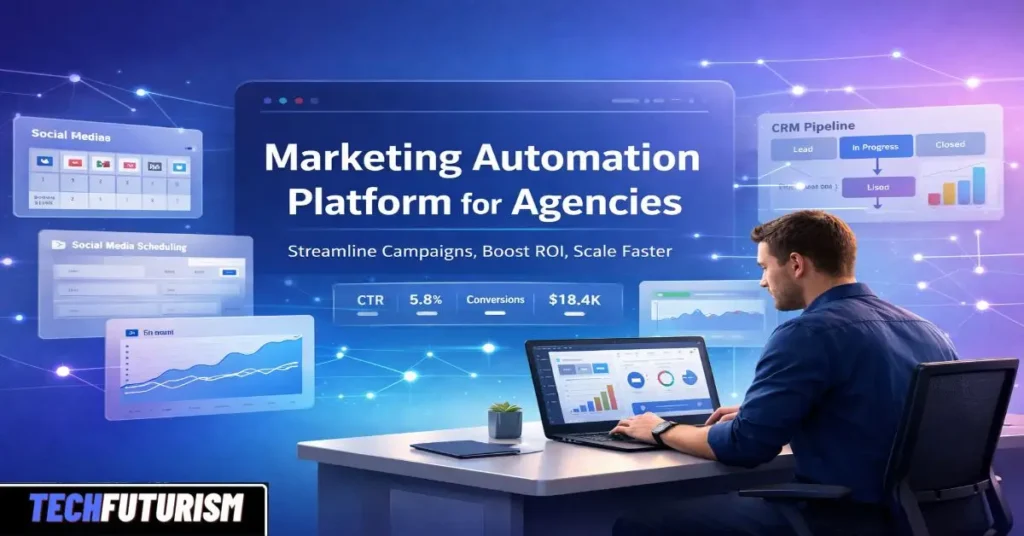
Running a modern agency often feels like spinning multiple plates at once. You manage clients, campaigns, leads, reports, and deadlines—all at the same time.
At first, manual work seems manageable. But as your agency grows, things start slipping—missed follow-ups, delayed campaigns, and scattered data.
That’s exactly where a marketing automation platform for agencies becomes your biggest advantage.
It helps you automate workflows, manage leads, track performance, and scale your agency without adding extra workload.
- Free Marketing Automation Platform for Agencies: Start Without Risk
- Best Marketing Automation Platform for Agencies: Top Tools Compared
- Top 10 Marketing Automation Tools Every Agency Should Know
- Marketing Automation Software: Must-Have Features
- List of Marketing Automation Platforms for Agencies (Use Case Based)
- Marketing Automation Examples: Real Use Cases That Drive Results
- Marketing Automation Tools Free vs Paid: What Should You Choose?
- 🪜Step-by-Step Guide: How to Use a Platform for Marketing Automation Agencies
- Why Agencies Are Rapidly Adopting Automation
- Common Mistakes to Avoid
- Final Thoughts
- Quick Recap
- Frequently Asked Questions (FAQs)
Free Marketing Automation Platform for Agencies: Start Without Risk
If you’re just getting started, choosing a free marketing automation platform for your agency is a smart move.
Platforms like HubSpot offer free plans with:
- CRM tools
- Email automation
- Lead tracking
According to industry insights, platforms like HubSpot provide integrated systems for marketing, sales, and automation, making them ideal for beginners and small agencies.
👉 These tools are perfect for:
- Freelancers
- Small agencies
- Testing automation before scaling
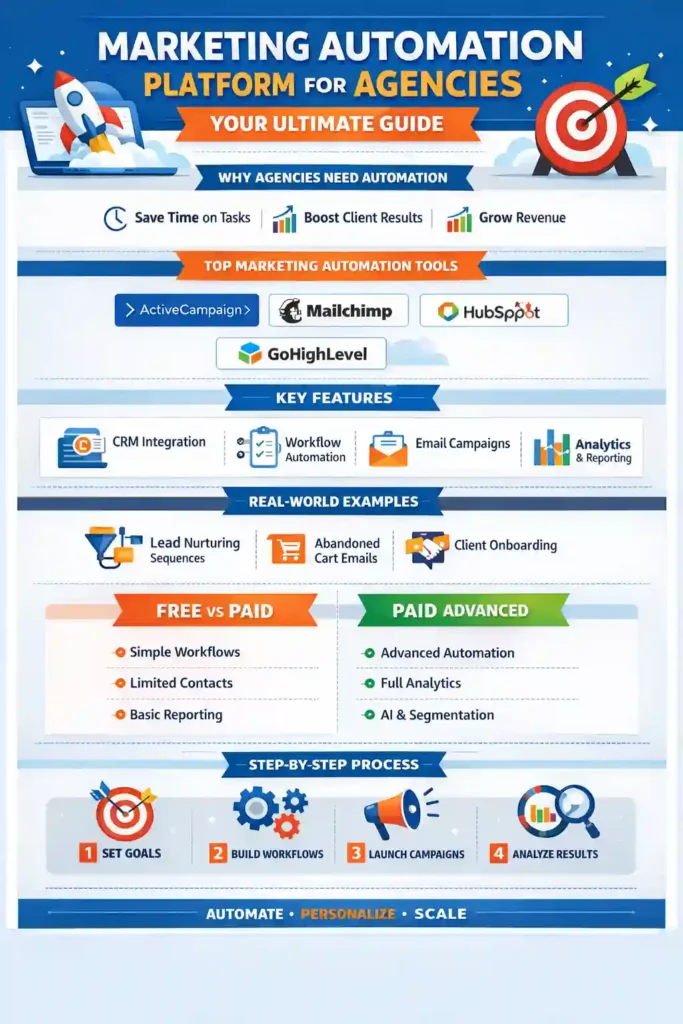
Best Marketing Automation Platform for Agencies: Top Tools Compared
Choosing the best platform marketing automation for agencies depends on your goals, budget, and client needs.
Here are some of the most powerful tools:
ActiveCampaign
ActiveCampaign
- Advanced automation workflows
- Built-in CRM and lead scoring
- Deep segmentation capabilities
👉 Ideal for agencies managing multiple campaigns with complex workflows
Mailchimp
Mailchimp
- Easy-to-use interface
- Pre-built templates
- Email and campaign automation
👉 Best for beginners and small teams
Act-On
Act-On
- Multi-client management
- CRM integrations
- Advanced reporting dashboards
Act-On even provides agency-specific dashboards to manage multiple campaigns in one place.
GoHighLevel
GoHighLevel
- Funnel builder and CRM
- Multi-client dashboards
- Automated email & SMS campaigns
It allows agencies to manage multiple clients from one dashboard while automating communication and improving conversions.
Klaviyo
Klaviyo
- Email + SMS marketing automation
- Customer data platform
- Strong eCommerce integrations
Klaviyo is widely used by online businesses for personalized messaging and automation.
Top 10 Marketing Automation Tools Every Agency Should Know
Here’s a curated list of marketing automation platforms:
- ActiveCampaign
- Mailchimp
- HubSpot
- GoHighLevel
- Act-On
- Klaviyo
- Zoho Marketing Automation
- Brevo
- GetResponse
- Constant Contact
👉 These tools help agencies automate workflows, manage leads, and scale operations efficiently.
Marketing Automation Software: Must-Have Features
When selecting marketing automation software, focus on these features:
CRM Integration
Centralize contacts, pipelines, and client data.
Workflow Automation
Automate customer journeys based on user actions.
Email Marketing Automation
Send:
- Welcome emails
- Drip campaigns
- Follow-ups
Multi-Channel Marketing
Reach users via:
- SMS
- Social media
Modern platforms like Attentive support omnichannel engagement across multiple communication channels.
Analytics and Reporting
Track performance and optimize campaigns using real-time data.
List of Marketing Automation Platforms for Agencies (Use Case Based)
| Use Case | Platform |
| Beginners | Mailchimp |
| Advanced automation | ActiveCampaign |
| All-in-one solution | HubSpot |
| Agency-focused | GoHighLevel |
| eCommerce | Klaviyo |
Marketing Automation Examples: Real Use Cases That Drive Results
Understanding marketing automation examples makes things clearer.
Lead Nurturing
A user downloads a guide → receives automated emails → becomes a client
Abandoned Cart Recovery
User leaves checkout → gets reminder email → completes purchase
Client Onboarding
New client signs up → receives onboarding sequence → faster setup
Multi-Channel Campaigns
Automation ensures consistent messaging across platforms, improving engagement and conversion rates.
Marketing Automation Tools Free vs Paid: What Should You Choose?
Many agencies start with marketing automation tools free, then upgrade.
Free Tools Offer:
- Basic workflows
- Limited contacts
- Simple reporting
Paid Tools Offer:
- Advanced segmentation
- AI-driven automation
- Deep analytics
👉 A smart strategy is to start free and upgrade as your agency grows.
🪜Step-by-Step Guide: How to Use a Platform for Marketing Automation Agencies
Step 1: Define Your Goals
Decide what you want:
- More leads
- Better conversions
- Faster workflows
Step 2: Choose the Right Platform
Select based on:
- Budget
- Features
- Client needs
Step 3: Set Up CRM and Integrations
Connect:
- Website
- Social media
- Email tools
Step 4: Build Automation Workflows
Create:
- Funnels
- Email sequences
- Triggers
Step 5: Segment Your Audience
Group users by behavior and interests.
Step 6: Launch Campaigns
Run automated campaigns across channels.
Step 7: Optimize and Scale
Use analytics to improve performance and ROI.
Why Agencies Are Rapidly Adopting Automation
The marketing industry is shifting toward automation and AI-driven strategies.
Recent trends show that automation improves:
- Efficiency
- Personalization
- Campaign performance
AI-driven platforms can generate and optimize campaigns at scale, improving engagement and reducing manual work.
Additionally, workflow automation has been shown to reduce execution time and errors compared to manual processes dramatically.
You can also use AI ad creative analysis tools along with a marketing automation platform for agencies to understand which ads work best and automatically improve your campaigns for better results.
Common Mistakes to Avoid
Even the best platform marketing automation for agencies won’t help if used incorrectly.
Avoid:
- Over-automation (losing human touch)
- Poor segmentation
- Ignoring analytics
- Not testing campaigns
Final Thoughts
A marketing automation platform for agencies is not just a tool—it’s your growth engine.
It helps you:
- Save time
- Improve results
- Scale your agency faster
👉 Whether you start with free tools or invest in platforms like ActiveCampaign, the key is simple:
Automate smartly, personalize deeply, and optimize continuously.
Quick Recap
- It improves efficiency and scalability
- Free tools are ideal for beginners
- Platforms like ActiveCampaign, HubSpot, and GoHighLevel offer powerful automation
- Automation helps agencies grow faster and increase revenue
Frequently Asked Questions (FAQs)
1. What is a marketing automation platform for agencies?
It is a software tool that helps agencies automate their marketing tasks, manage leads, and run campaigns more efficiently.
Instead of doing everything manually, the platform:
Sends emails automatically
Tracks customer behavior
Manages leads in one place
Runs campaigns based on user actions
For example, when someone signs up on a website, the system can automatically send a welcome email, follow-up messages, and even notify the sales team when the lead is ready.
In simple words, it works like a smart assistant that handles repetitive marketing work, so agencies can focus on strategy and growth.
2. What are the benefits of using marketing automation for agencies?
Using a platform marketing automation for agencies comes with several powerful benefits.
Here’s what you get:
Saves time by automating repetitive tasks
Improves lead nurturing with timely follow-ups
Increases conversions through personalized messaging
Better data insights for smarter decisions
Scales your agency faster without hiring more people
Studies show that marketing automation can increase sales productivity and reduce marketing costs, while also improving lead quality and conversion rates.
It also helps deliver the right message at the right time, which improves customer experience and engagement.
👉 Simply put: you do less manual work and get better results.
3. How does marketing automation work step by step?
Marketing automation works by collecting data and triggering actions based on user behavior.
Here’s a simple step-by-step explanation:
Step 1: Collect Data
The system gathers data from:
Website visits
Email interactions
Social media activity
Step 2: Segment Audience
It groups users based on:
Interests
Behavior
Demographics
Step 3: Create Automated Workflows
You set rules like:
“If user signs up → send welcome email.”
“If user clicks link → send follow-up offer.”
Step 4: Trigger Actions Automatically
The system sends messages or updates based on user actions.
Step 5: Track and Optimize
You analyze results and improve campaigns.
Marketing automation tools use customer data to deliver personalized messages across email, social media, and other channels automatically.
👉 It’s like setting up a system once—and letting it run continuously.
4. What are some real examples of marketing automation?
Understanding marketing automation examples makes it much easier to see its value.
Here are some common real-world examples:
Email Drip Campaigns
When someone signs up, they receive a series of automated emails over time.
Abandoned Cart Emails
If a user leaves without buying, they get a reminder email to complete the purchase.
Personalized Recommendations
Platforms like Netflix and Amazon use automation to suggest content or products based on user behavior.
Lead Nurturing
Leads receive targeted emails based on their actions until they are ready to buy.
Multi-Channel Campaigns
Automation sends messages across email, SMS, and social media to maintain consistency and engagement.
👉 These examples show how automation helps businesses increase engagement, improve conversions, and deliver better customer experiences.
✅ Final Note
It is not just about saving time—it’s about working smarter, scaling faster, and delivering better results consistently.