
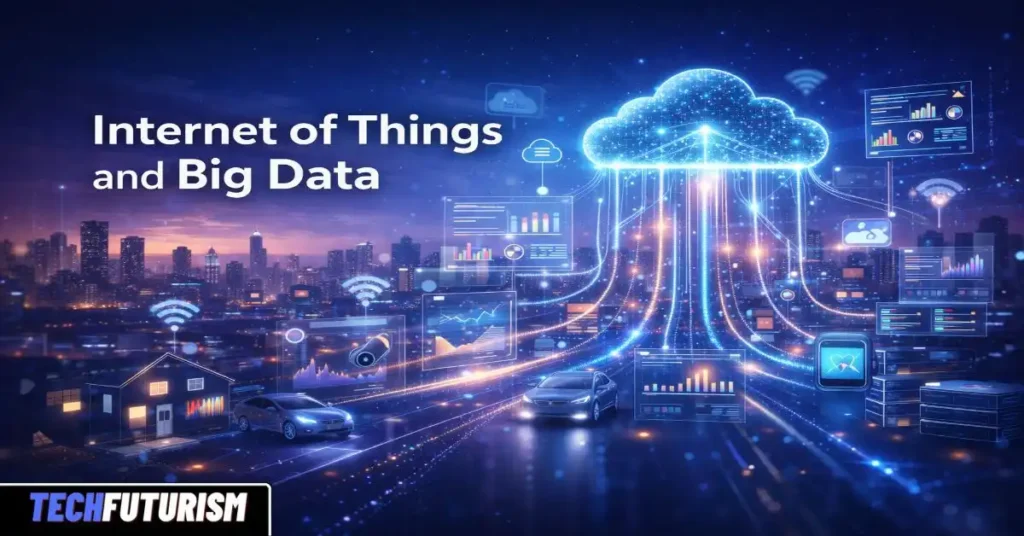
The world is being reshaped by Internet of Things Big Data — a transformative fusion of connected devices, real-time insights, and powerful analytics that drives smarter decisions, automation, and measurable value. From smart homes and industrial automation to predictive healthcare and supply chain optimization, the partnership between IoT and big data analytics has become the backbone of modern digital systems.
In this comprehensive guide, you’ll learn what IoT big data truly means, how it works, why it matters, and how to select the right IoT big data software platform with confidence.
- Internet of Things Meaning: What It Is and Why It Matters
- IoT Definition and Examples: How It Shows Up in the Real World
- Internet of Things Purpose: What IoT Is Designed to Do
- Applications of IoT: Where It’s Making the Biggest Impact
- How Does the Internet of Things Work? A Clear Step-by-Step Breakdown
- Advantages of IoT: Why It’s Worth Investing In
- Internet of Things Big Data: Turning Raw Information Into Insight
- IoT Platform: What It Is and Why You Need One
- Step-by-Step Guide to Choosing the Right IoT Big Data Software Platform
- What the Statistics Say About IoT Growth in 2026
- Final Thoughts: Embrace the Future With Confidence
- Frequently Asked Questions (FAQ)
Internet of Things Meaning: What It Is and Why It Matters
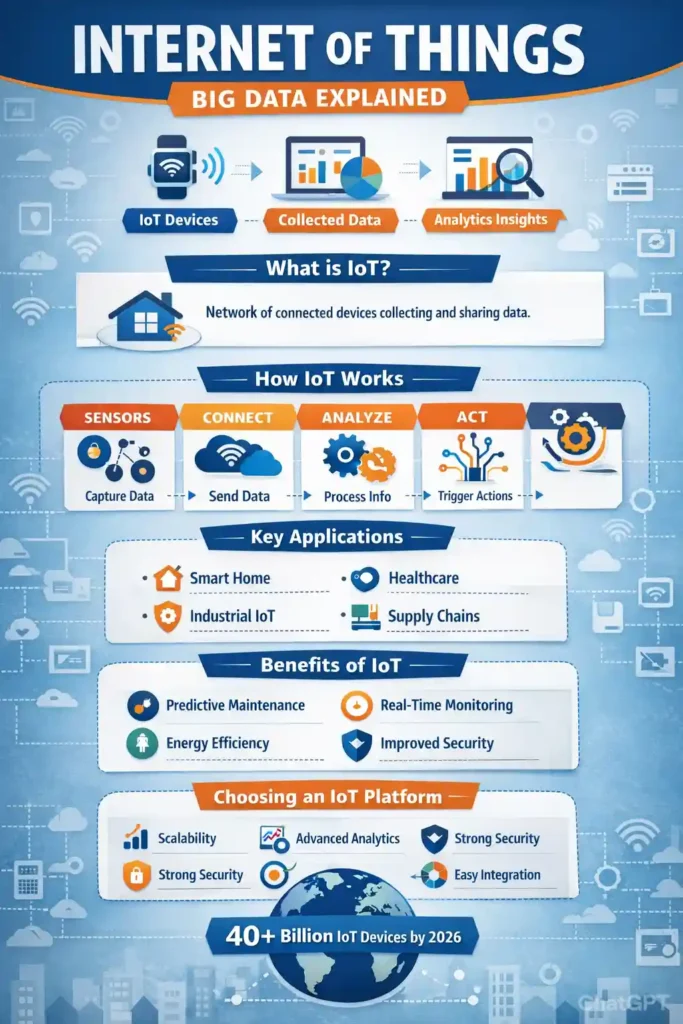
The Internet of Things (IoT) refers to a vast network of physical objects — from everyday appliances to industrial machines — that are embedded with sensors, software, and connectivity to connect to the internet, exchange data, and enable automation and intelligence without continuous human intervention.
These connected devices include everything from simple wearables to complex industrial equipment. Their sensors collect data from the real world and translate it into meaningful digital insights that organizations can use for smarter decisions.
IoT Definition and Examples: How It Shows Up in the Real World
An accurate IoT definition means recognizing how deeply connected “things” already are in our daily lives and work environments. From smart thermostats that adjust your home temperature automatically to asset trackers that help manage global logistics, IoT is everywhere.
Everyday Internet of Things Examples
- Smart thermostat adjusts climate settings based on your schedule.
- Wearables monitor vital signs like heart rate or activity levels.
- Home security systems alert you to unusual activity.
- Sensors track energy consumption for efficiency.
Advanced Industrial IoT Examples
- Connected sensors on manufacturing lines predict failures before they occur.
- Ambient IoT sensors at retail giant Walmart track pallets and inventory in real time, boosting supply chain accuracy and decision speed.
These examples highlight the real-world impact of IoT — not just as technology, but as a system that bridges physical environments with digital intelligence.
Internet of Things Purpose: What IoT Is Designed to Do
The primary purpose of the Internet of Things is to capture meaningful data from the physical world, analyze it at scale, and improve outcomes across industries. Whether in homes, factories, or healthcare facilities, IoT systems help organizations and individuals make better decisions faster.
That purpose unfolds through:
- Scientific data collection from distributed sensors
- Real-time connectivity via Wi-Fi, cellular, and other networks
- Immediate insights that can automate processes
- Predictive analytics that reduce errors, downtime, and waste
This purposeful data usage powers improvements in efficiency, security, performance, and innovation.
Applications of IoT: Where It’s Making the Biggest Impact
IoT and its big data analytics capabilities extend across nearly every industry:
Smart Homes
Connected lights, thermostats, and appliances make life more comfortable while reducing energy waste.
Healthcare
IoT wearable and medical devices continuously monitor patient health, alerting caregivers to issues before they escalate.
Manufacturing
IoT technologies improve production processes, enable efficiency tracking, and help teams predict maintenance before breakdowns occur.
Transportation & Logistics
From fleet tracking to route optimization, connected devices help supply chains manage goods more efficiently and transparently.
Agriculture
IoT sensors monitor soil moisture, humidity, and crop health, enabling precision farming that enhances yields and reduces resource use.
These applications of IoT demonstrate its transformative power across diverse domains.
How Does the Internet of Things Work? A Clear Step-by-Step Breakdown
Understanding how IoT systems operate helps clarify why they produce so much value:
- Sensors & Devices: IoT devices with built-in sensors capture real-world parameters such as temperature, motion, location, or energy usage.
- Internet Connection: These devices communicate their readings via Wi-Fi, cellular, Bluetooth, or other wireless technologies.
- Transmission of Collected Data: Once connected, devices send their data to central systems or cloud platforms.
- Data Storage & Analytics: Big data analytics processes and analyzes this volume of data to derive patterns and actionable insights.
- Automated Actions & Decisions: Insights can trigger automatic responses — like adjusting machine operations, sending alerts, or updating dashboards.
This seamless integration from physical sensing to intelligent action explains IoT’s powerful role in digital transformation.
Advantages of IoT: Why It’s Worth Investing In
The benefits of IoT extend far beyond novelty — they deliver measurable ROI, cost savings, and performance improvements:
✔ Real-time visibility into operations and environments.
✔ Predictive maintenance that cuts downtime and repair costs.
✔ Enhanced energy efficiency and sustainability.
✔ Faster, smarter decision-making via actionable insights.
✔ Scalability across enterprise systems and applications.
For example, IoT platforms analyzing data in real time have been shown to improve operational efficiency by up to 25% for businesses, according to trends in industrial data analytics.
Internet of Things Big Data: Turning Raw Information Into Insight
The phrase IoT Big Data refers to the enormous datasets generated by IoT systems. These data streams are valuable — but only when analyzed using sophisticated platforms that can filter, organize, and interpret them for insights.
Big data analytics enables organizations to:
- Identify trends and patterns
- Predict future outcomes
- Reduce risk
- Improve efficiency
AI-enhanced IoT analytics platforms have grown rapidly, with AI processing increasing accuracy and real-time responsiveness, enabling faster decisions and reduced downtime for organizations.
IoT Platform: What It Is and Why You Need One
An IoT platform is a central software system that:
- Connects and manages IoT devices
- Aggregates, stores, and processes collected data
- Performs analytics and visualization
- Facilitates automation and alerts
- Ensures connectivity across diverse network protocols such as Wi-Fi or 5G
In simple terms, it’s the bridge between raw sensor data and actionable intelligence. Effective platforms enable enterprises to scale, integrate with cloud services, and maintain security across all connected devices.
Step-by-Step Guide to Choosing the Right IoT Big Data Software Platform
To confidently select the ideal IoT analytics platform, follow this practical roadmap:
1. Clarify Your Goals
Decide whether you need real-time alerts, predictive insights, historical analysis, or all of the above.
2. Evaluate Scalability & Integration
Ensure the platform can support growth in devices, users, and data volume, while integrating with existing business systems and workflows.
3. Check Security Features
Security should be a priority — choose platforms with robust encryption, access controls, and compliance support.
4. Analyze Analytics Capabilities
Look for advanced real-time dashboards, machine learning models, and automated reporting.
5. Consider Support & Ecosystem
A strong developer community and vendor support network can accelerate implementation and future enhancements.
This process doesn’t just help you choose a platform — it helps you invest confidently.
What the Statistics Say About IoT Growth in 2026
IoT is no longer niche — it’s massive:
- There are over 18.8 billion connected IoT devices worldwide, and that number is expected to exceed 40 billion within a few years.
- IoT systems alone could generate 79.4 zettabytes of data by 2025.
- AI-based IoT platforms are reducing downtime and improving decision speed for organizations globally.
These trends show that IoT big data isn’t just expanding — it’s reshaping entire industries and value chains.
When we combine the Internet of Things and Big Data with Big Data and Visualization, complex device data becomes simple charts and dashboards that anyone can understand and use to make better decisions quickly.
Final Thoughts: Embrace the Future With Confidence
The combination of IoT, sensors, connectivity, and big data analytics is more than a technology trend — it’s a fundamental shift in how the physical and digital worlds interact. By understanding what IoT big data is, how it works, and how to choose the right software platforms, you’re equipped to lead transformation in your business or field.
The future is connected — and it’s powered by smart data, intelligent automation, and systems that learn, adapt, and grow.
Frequently Asked Questions (FAQ)
1. What exactly is the Internet of Things and how is it connected to big data?
The Internet of Things (IoT) is a network of devices and objects — like sensors, appliances, machines, and wearable gadgets — that are connected to the internet and can collect, send, and receive data automatically. These devices gather real-world information (like temperature, movement, or machine performance) and send it over a network.
When all this data is collected together from many connected devices, it becomes what we call big data — extremely large amounts of information that traditional tools can’t easily handle. IoT devices create this data continuously, and big data analytics is used to make sense of it, find patterns, and drive decisions that improve operations, save costs, or make systems smarter.
In simple terms:
IoT is the source of the data, and big data analytics is the tool that turns that data into insight. This combination lets businesses understand trends, predict maintenance issues, and make real-time decisions.
2. How does IoT actually work from start to finish?
Understanding how IoT works doesn’t require technical knowledge — here’s a simple explanation:
Sensors capture data – IoT devices with built-in sensors collect information from the environment, such as temperature, movement, or usage.
Internet connection delivers data – The data is sent through the internet connection (often via Wi-Fi, cellular networks, or other communication protocols).
Data is transmitted and stored – This collected data is sent to a central system or cloud platform designed to handle large volumes of information.
Analytics processes the data – The system analyzes the data with smart software, which looks for trends, patterns, and important signals.
Actionable results are produced – Based on the insights, the system can send alerts, automate actions, or display visual results on dashboards.
So IoT is really a continuous loop of sensing → sending → analyzing → acting, which makes systems more intelligent and responsive without needing humans to micro-monitor everything.
3. What are the common challenges and limitations of IoT big data systems?
While IoT and big data offer exciting benefits, they also come with real challenges that people often ask about:
Data Volume and Speed: IoT devices generate massive amounts of data very quickly — faster than traditional software can handle without specialized analytics tools.
Data Quality and Management: Raw IoT data can be noisy or inconsistent, so systems must clean and organize it before it becomes useful.
Security Risks: Connected devices are often vulnerable to hacking if not protected properly, because each additional device increases the potential attack surface.
Integration and Scaling: As more devices enter the network, ensuring they work together reliably and scale without service slowdowns can be complex.
Despite these challenges, modern IoT platforms and big data tools are continually improving ways to manage real-time flows, secure connections, and make data actionable for businesses.
4. What should I look for when choosing an IoT big data platform?
When you plan to adopt an IoT big data software platform, here are the key things most people and businesses consider:
Scalability: Make sure the platform can grow with your IoT ecosystem as more devices are added. It should handle huge volumes of data without slowing down.
Real-time analytics: Look for systems that can analyze streaming data instantly so you can act on insights as they happen.
Security: Strong encryption, access controls, and secure data transmission are essential because IoT devices can expose systems to cyber risks.
Integration capabilities: Choose platforms that can seamlessly connect with your existing systems and support multiple device types.
Visualization and alerts: The platform should be able to present easy-to-understand dashboards and actionable alerts based on big data analysis.
A good title for this kind of platform would be IoT analytics platform — it’s the backbone that transforms raw device data into insights that improve operations, enhance performance, and help businesses make smarter decisions.